What mistakes do car dealers make when importing cars to Ukraine?
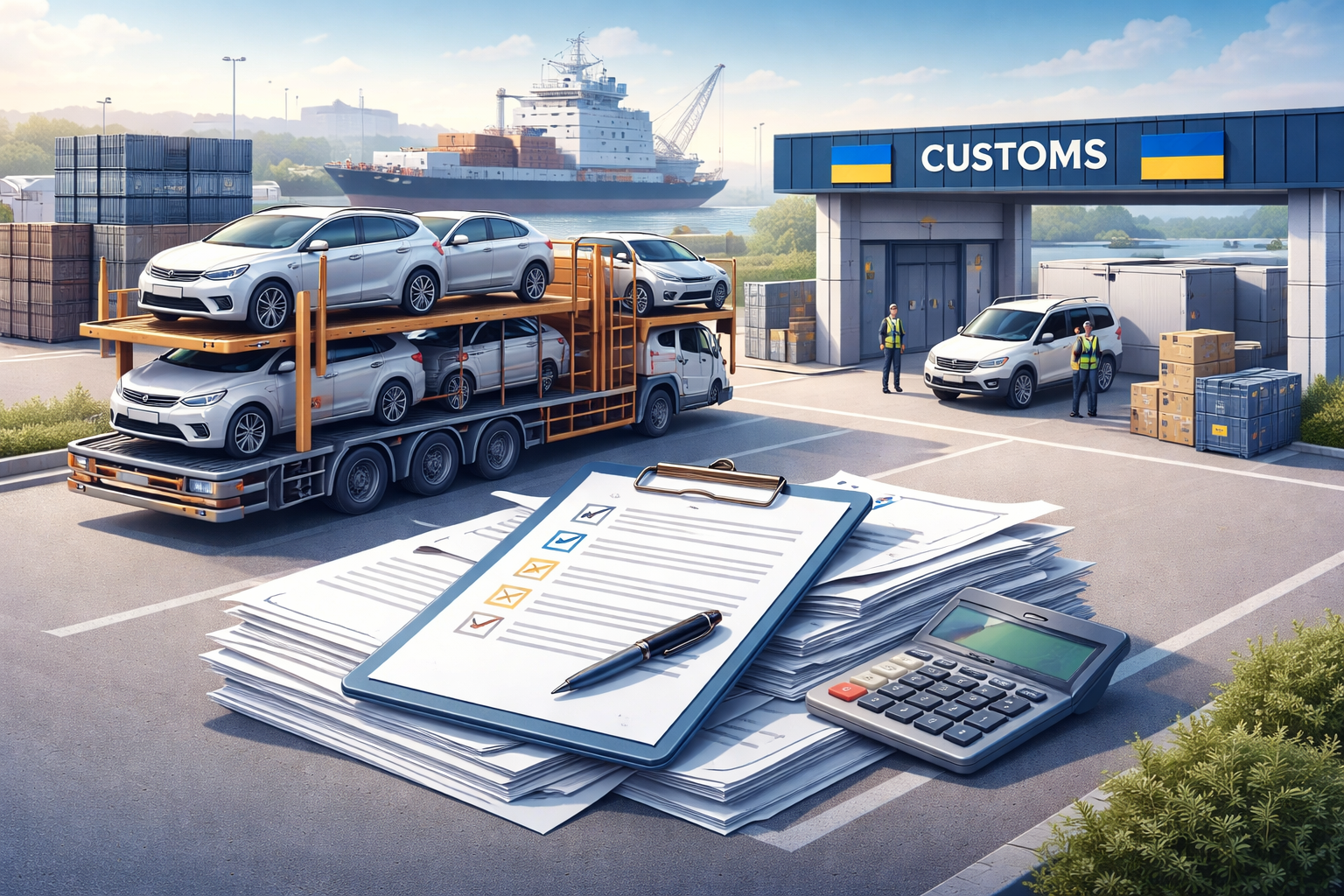
Up to 80% of a car dealer's financial losses occur before the border is crossed . Not in logistics, but in documents, payment, and import models. These errors are systemic and repeated from delivery to delivery.
Typical mistakes made by car dealers when importing cars
Mistake 1. Commercial imports are registered as “private”
Most often, the problem starts with the customs model. And they buy cars for resale, but register them "as if for themselves."
In commercial imports, it is not only the duty rate that is important. Customs looks at the whole picture: how the price was formed, who the seller is, how the funds moved, whether the deal looks logical. If these points are not prepared in advance, the consequences are standard :
- the customs value is adjusted;
- VAT and customs duties are calculated on a different amount;
- the planned margin disappears before the sale.
Customs does not evaluate the price in the declaration, but the logic of the transaction . The customs value is what you were able to prove with documentation.
Mistake 2. Buying a car without thoroughly checking the seller and the car itself
Dealers are well-versed in the market, but they often underestimate the risks abroad. Problems arise not only with price or condition, but with basic things that are difficult to fix later.
The most common problems:
- the car has hidden defects that are not visible from the photo or brief report;
- The VIN is problematic: it is broken, cannot be read in databases or does not match the documents;
- documents are forged or issued for another car;
- the car is under unpaid lease or under financial encumbrance;
- a car is wanted or has a criminal history;
- the seller is a shell company or a non-existent structure
The key mistake here is to check these things after payment. In such cases, the funds are frozen. Legal resolution takes months.
Mistake 3. Underestimating the role of payment and bank confirmation
Today, payment is part of customs history. Customs always looks at the chain: invoice → payment → export .
If:
• payment not confirmed;
• the sides do not match;
• the amount seems illogical,
The customs value automatically becomes questionable. This is where individuals “break” imports, and businesses lose predictability.
Mistake 4. There are benefits, but they are not included in the model
A typical example is a car of European origin and an EUR.1 certificate.
If the documents are prepared correctly:
- the duty is reduced from 10% to ≈1.8%;
- savings — thousands of euros per car.
The problem is not in the benefit itself, but in the details: the documents must be prepared correctly and on time. If something is missed at the export stage, the right to the benefit simply disappears.
Mistake 5. Leaving certification for later
Another recurring scenario:
- the car has already cleared customs;
- taxes paid;
- The certification is not passed.
This is especially often the case for:
- cars from the USA;
- electric vehicles;
- hybrids.
As a result, the sale stops. The car stands. The funds are frozen. Corrections after import are almost always more expensive than a pre-purchase inspection. That is why certification requirements should be considered before buying a car, not after it is imported.
Mistake 6. Lack of a unified import strategy
Many dealers act situationally:
- various brokers;
- various logistics;
- different approaches to documents.
As a result, there are no answers to simple questions:
- real cost of the car;
- terms of funds turnover;
- actual margin.
Without a system, imports cease to be a managed business and become a set of random decisions.
What does a car import look like for a car dealer?
After analyzing the errors, the logical question is what should be done .
The correct import model looks like this:
- Determining the commercial model before buying a car.
- Full check of the seller, car and documents before payment .
- Structured payment with payment confirmation.
- Preparation of export documents and possible benefits.
- Customs clearance without adjustments.
- Certification taken into account at the car selection stage.
It is this logic that dealers work by, not losing margin on each car.
Practice: what West Auto Hub sees
When working with car dealers, West Auto Hub most often encounters one situation: import starts without a clear plan, and complex issues arise already at customs.
When the import model is calculated before buying a car :
- adjustments disappear;
- taxes become predictable;
- certification does not block sales.
That is why we see most problems at the planning stage, not after import.
FAQ - short and to the point
Can a dealer import a car "as an individual"?
It is possible. But it is almost always financially unprofitable for business.
When should you think about certification?
Before buying a car, not after customs clearance.
Are all cars eligible for benefits?
No. Benefits depend on origin and documents.
Can mistakes be corrected after customs?
It is possible. But it is almost always more expensive than prevention.
What most often "kills" margins?
Customs value adjustments and payment errors.
Conclusion
Importing a car for a car dealer is not logistics. It is a system of decisions made before buying a car . When importing is structured as a process, it becomes manageable and profitable.
Tip from West Auto Hub : If you see a car but don't see the entire import model, the risk is almost always built into the price.